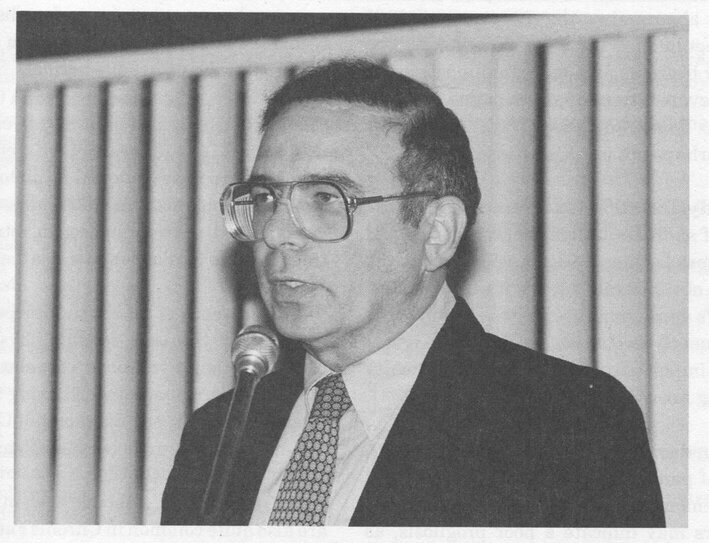
I was deeply saddened to learn that Dr. Jay Goldstein had passed away on March 4, 2021. Dr. Goldstein was a pioneer among ME/CFS researchers and clinicians. He rose to prominence in the 1990s through his clinical practice, and through the publication of several seminal works, chief among them: Betrayal by the Brain : The Neurologic Basis of Chronic Fatigue Syndrome, Fibromyalgia Syndrome, and Related Neural Network Disorders, Tuning the Brain : Principles and Practice of Neurosomatic Medicine, and Chronic Fatigue Syndromes : The Limbic Hypothesis. In addition to his books, Dr. Goldstein was also one of the editors, along with Dr. Byron Hyde, of The Clinical and Scientific Basis of Myalgic Encephalomyelitis–Chronic Fatigue Syndrome, a collection of papers on clinical practice and research that remains unsurpassed in both depth and scope.
Dr. Goldstein believed that ME/CFS was the result of an insult to the limbic system, located deep within the brain. The limbic system is involved with memory, emotion, and regulation of the autonomic nervous system. This last function is of critical importance to maintaining homeostasis in the body, as the autonomic nervous system regulates appetite, body temperature, blood pressure, blood sugar, sleep, wakefulness, heart rate, digestion – in short, nearly every physiological function necessary for maintaining life.
Dr. Goldstein’s theory, as laid out in his book, Betrayal by the Brain, was that ME/CFS is essentially a communication problem between the limbic system and the rest of the nervous system. His “limbic hypothesis” essentially states that no matter what the underlying cause of ME/CFS, the result is an injury to the limbic system, which subsequently causes widespread neuroimmune dysfunction. He identified ME/CFS as a “neurosomatic” illness, that is, a disorder of central nervous system processing. Dr. Goldstein based his theory on what he knew of the brain, which was substantial, as well as what he had observed of his patients’ reactions to various psychotropic medications. Recent studies have shown that in his approach Dr. Goldstein was far ahead of his time.
Dr. Goldstein will be sorely missed, not just for his tremendous insights but for his compassion and commitment to his patients. There will never be another like him. RIP Dr. Jay A. Goldstein.